Knowledge & analysis

Voltified blog

Battery diagnostics, the BHV algorithm, the used-EV market and second-life technologies - facts, not guesswork.

Do EVs really catch fire more often? We check the facts

Do EVs really catch fire more often? We check the facts

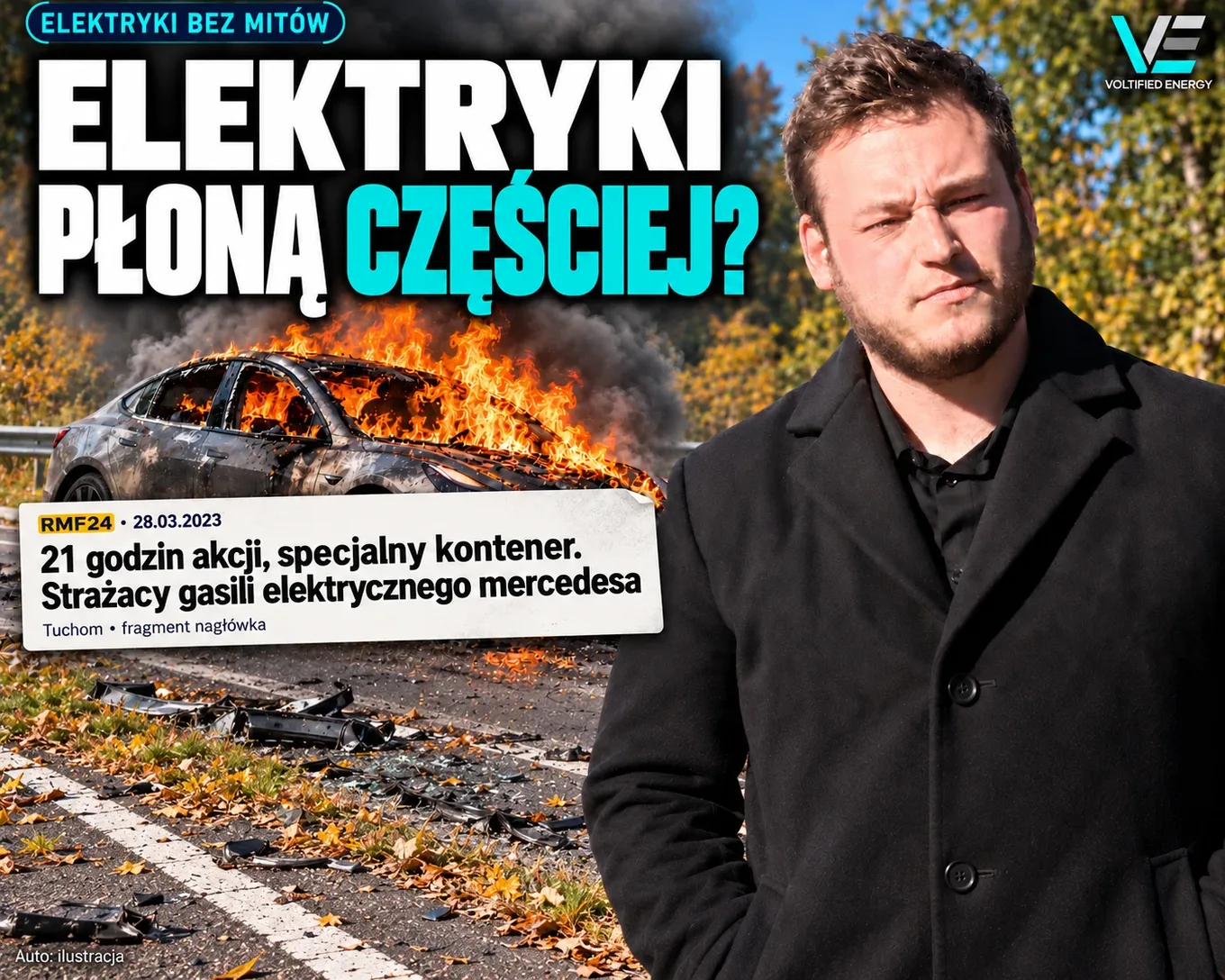
A single video of a burning electric car can spread across the internet within hours and become an argument against the entire technology. But does the available data really confirm that EVs catch fire more often? We analyse Polish and European statistics and explain thermal runaway, the role of the BMS and the specifics of emergency response. We also invite you to watch the first episode of our new series “Elektryki bez mitów” (“EVs Without Myths”).

Chargers Are Only the Beginning: How Should Poland Prepare for Mass Electromobility?

Chargers Are Only the Beginning: How Should Poland Prepare for Mass Electromobility?

The slogan “EV charger-ready” is already appearing at new housing developments. It is an important sign that electromobility is becoming part of the everyday planning of buildings and residential estates. True readiness, however, requires far more than a space for a wallbox: adequate power, new grid connections, smart energy management, a reliable public network, and vehicles and batteries capable of using it efficiently. We look at where Poland stands today and what we need to do before 2030.

Voltified Energy at the 13th Polish Congress of Entrepreneurship

Voltified Energy at the 13th Polish Congress of Entrepreneurship

On 3–4 November 2026, Voltified Energy will take part in the 13th Polish Congress of Entrepreneurship in Wrocław. Gabriel Markut, the company’s CEO and co-founder, will appear as a speaker and panellist, presenting the Battery Health Value concept we are developing. At our own stand, we will showcase traction battery diagnostics, the Voltified Certificate and solutions that support the assessment of the risk and value of electric cars. Our participation in the Congress will conclude with an evening gala, at which Voltified Energy will appear as a nominee for the Polish Innovation Award 2026.

Voltified Energy featured in “Gazeta Ubezpieczeniowa”

Voltified Energy featured in “Gazeta Ubezpieczeniowa”

Issue 40/2026 of “Gazeta Ubezpieczeniowa” (a Polish insurance trade newspaper) features an article by Gabriel Markut, CEO of Voltified Energy, on why battery condition matters for the value of an electric car and for claims handling. The piece explains why, in the case of EVs, model year, mileage and a standard inspection are not always enough for a full assessment of a vehicle, and how reliable battery data can support valuation, determining the extent of damage and assessing whether a repair is justified. It is also Voltified Energy’s voice in a broader conversation about the need for common diagnostic standards, transparent reports and better cooperation between technology and the insurance market. As the number of used electric cars grows, this kind of information will become increasingly important for insurers, appraisers, repair shops, dealers and drivers.

Mileage Is No Longer Enough: How Battery Data Will Transform Used EV Valuation

Mileage Is No Longer Enough: How Battery Data Will Transform Used EV Valuation

Mileage, age and service history are no longer enough to value a used electric vehicle fairly. The battery-its actual condition, the quality of available evidence and its impact on future costs-is becoming crucial. We examine why SoH alone is not enough and how BHV could change pricing, financing and trust in the EV market.

Used electric cars from Germany are on their way!

Used electric cars from Germany are on their way!

For years, Germany has been the main source of used cars imported into Poland. Meanwhile, more than 2 million electric cars are already on German roads, and the first larger cohorts of BEVs are reaching the age typical of the used-car market and approaching the end of their warranty coverage. This could give Poland access to attractively priced electric cars — but it could also pass on risks to buyers that cannot be assessed with a paint thickness gauge.

Voltified Energy at the Ministry of Climate and Environment!

Voltified Energy at the Ministry of Climate and Environment!

We do not want to wait for electric-car battery standards to be developed outside Poland. We want to help build them. On 3 September 2026, the Voltified Energy team met representatives of the Ministry of Climate and Environment to present its own market research, diagnostic technology, the BHV model and a vision for a safe, transparent used-EV market.

Voltified Energy nominated for the Polish Innovation Award 2026

Voltified Energy nominated for the Polish Innovation Award 2026

Voltified Energy has received an official letter nominating it for the Polish Innovation Award 2026. For our team, this is important recognition of the path we have chosen and further encouragement to develop Polish technology with the ambition to make a real impact on Europe’s electric-mobility market.

The battery passport will not solve the EV market’s trust problem. It is only the beginning

The battery passport will not solve the EV market’s trust problem. It is only the beginning

From 18 February 2027, traction batteries entering the European Union market will receive a digital passport. This is an important step towards transparency, but a QR code will not automatically become a certificate of a battery’s current condition. We explain what the passport actually solves, what it cannot do and why the used-EV market will still need independent diagnostics, data interpretation and reliable valuation.

Poland cannot be only Europe’s factory. It must become its laboratory!

Poland cannot be only Europe’s factory. It must become its laboratory!

Business patriotism does not mean choosing everything simply because it carries a Polish label. It means building knowledge, technology, intellectual property and standards in Poland that are good enough for Europe to choose them. Using the examples of Jan Czochralski, InPost, Solaris and the battery sector, we show why Poland cannot settle for being a factory — it must also become a laboratory.